
Woodside High School

Congratulations class of 2026!
Welcome to Woodside High School
GRADUATION - JUNE 5, 2026
![GRADUATION_-_JUNE_5,_2026 icon]() GRADUATION - JUNE 5, 2026title
GRADUATION - JUNE 5, 2026title
Graduation is finally here! The class of 2026 will be celebrating their commencement by walking across the stage on Bradley Field on Friday, June 5 at 9:30am.
During this significant milestone, many questions naturally arise regarding the logistics and expectations of the ceremony. We have compiled the following information to ensure a smooth and memorable experience for all graduates and their guests.
Arrival and Logistics
Parking is expected to be extremely limited on graduation day. To alleviate congestion, all attendees are strongly encouraged to utilize carpooling, walking, or ride-share services for this event.
For graduates, the day begins early. All students must be on campus by 9:00am to meet at the I wing lawn for check-in and final preparations. Please be reminded that caps CANNOT be decorated for the formal graduation ceremony; we ask for your cooperation in maintaining the traditional decorum of the event.
Seating and Spectator Information
Guests are encouraged to utilize seating on both sides of Bradley Field to get the best view. To ensure the safety of our students and the integrity of the ceremony, NO ONE is allowed onto the field at any time. The gates for spectator entry will open at 7:30am.
Students will receive specific details regarding their seating assignments during the mandatory rehearsal on Thursday.
Handicap and special seating accommodations are provided at the top of Bradley Field under designated tents. Please be aware that these seats are available on a first-come, first-served basis. To ensure we can accommodate as many individuals with needs as possible, we request that only one additional companion remains with the individual requiring special seating. The Performing Arts Center will also be open with a live stream of the ceremony.
Ceremony Etiquette
The most poignant moment of the graduation ceremony is hearing each student's name called as they receive their diploma. Out of respect for every graduate and their family, we strictly ask that people DO NOT BRING AIR HORNS! It is our goal to ensure that the celebration of one student does not diminish or drown out the recognition and moment of another.
Post-Ceremony and Memorabilia
Following the conclusion of the commencement, graduates and their families are encouraged to have a pre-arranged meet-up spot designated outside the field to facilitate finding one another in the crowds.
2026 YEARBOOKS
![2026_YEARBOOKS icon]() 2026 YEARBOOKStitle
2026 YEARBOOKStitle
The 2026 yearbooks have arrived. Those who purchased a yearbook already can pick it up in the main office (8:30am-3:30pm). A limited number of yearbooks are still available to be purchased. To purchase a yearbook, please go to D-5. The cost is $115 cash, $118 credit.
Any questions please reach out to Ms. Knowles at kknowles@seq.org.
1.99 RECORDS
![1.99_RECORDS icon]() 1.99 RECORDStitle
1.99 RECORDStitle
Did you know the Woodside High School has its own recording studio? Check out the music that has been produced by various Wildcats on their website.
1.99 Records is proud to announce the release of "Detras Del Viento," by Kathy Villa (Morales). THis song was produced with help from various students.
Also, Mr. Debets's advanced film class has put together a 41-minute video 1.99 Records Tiny Desk Concert: Take Two. This project was no small undertaking and took coordination between camera operators, editors, music mixers and the musicians themselves. Thank you to all who continue to support the arts at Woodside High School.

PTSA-Buy a Brick
![PTSA-Buy_a_Brick icon]() PTSA-Buy a Bricktitle
PTSA-Buy a Bricktitle
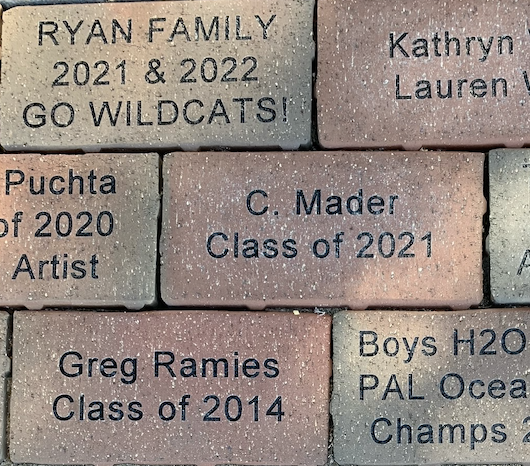
Leave a legacy with this great gift for Woodside High School students, past and present, or to thank a special teacher or staff member. For $150, your personalized brick will be placed on the entrance walkway in front of the administration building, a permanent part of the landscape at Woodside High School.
To purchase, use this link:

PARKING PASSES
![PARKING_PASSES icon]() PARKING PASSEStitle
PARKING PASSEStitle
Juniors and Seniors are allowed to purchase a school parking pass. In order to make the purchase, all required forms must be turned in. Passes are sold on a first come basis for $50.
At Wildcat Welcome Day on Tuesday, August 13 during the Junior/Senior time ONLY, there will be a station set up for students to submit their required paperwork and to pay for the parking pass. Students must bring their OWN COPIES of the the required forms. We will NOT be able to make copies for anyone.
Required Forms
- Parking Permit Application
- Copy of current drivers license
- Copy of proof of insurance
- Copy of vehicle registration
ABO Spirit Wear
![ABO_Spirit_Wear icon]() ABO Spirit Weartitle
ABO Spirit Weartitle
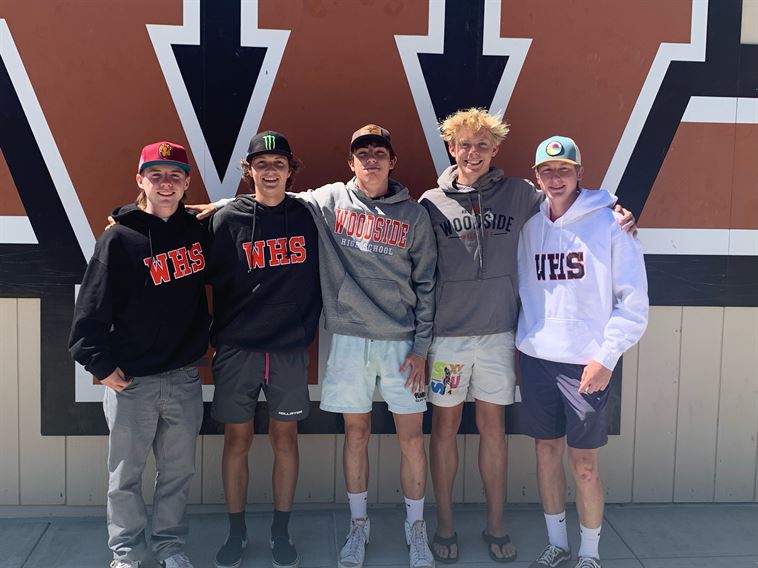
Time to stock up on some new WHS spirit attire through the Athletic Booster Organization.
Please go to the online store and purchase items.
Academic Assistance


![Academic_Assistance icon]() Academic Assistancetitle
Academic Assistancetitle
Varsity Tutors
Varsity Tutors is a free 24/7 online tutorial offered through the Sequoia Union High School District.
Tutorial
Tutorial is a time period built into the school day that allows students time to work on assignments, meet with teachers, and make up tests or quizzes. This time is dedicated to students to use for academic puposes.
To learn more about how the tutorial program works, please click on this link.

RWC Boys & Girls Club
![RWC_Boys_&_Girls_Club icon]() RWC Boys & Girls Clubtitle
RWC Boys & Girls Clubtitle
Welcome to Woodside High School
![Welcome_to_Woodside_High_School icon]() Welcome to Woodside High Schooltitle
Welcome to Woodside High Schooltitle
Woodside High School is a fully accredited four-year comprehensive secondary school that has been serving the communities of the mid-peninsula since its opening in 1958. The 34-acre campus lies just east of the Santa Cruz Mountains and is one of four comprehensive campuses in the Sequoia Union High School District. The District’s total student population is
approximately 10,000.
approximately 10,000.
The mid-peninsula is an area of great economic diversity containing some of the most affluent and the most economically deprived communities in the state. Just north of Silicon Valley and Stanford University, Woodside High School is influenced greatly by the rapidly evolving business and cultural interests of the region. Over the past half-century, Woodside High School has
emerged as one of the most dynamic and diverse comprehensive high schools on the San Francisco peninsula. We have been listed in Newsweek Magazine’s list of top high schools, and offer one of the most rigorous advanced placement college preparatory programs in the region.
Please review the most recent school profile to learn more.
Upcoming Events
![Upcoming_Events icon]() Upcoming Eventstitle
Upcoming Eventstitle
|
|
Calendars
Parent Square
 Parent Squaretitle
 Wildcat Spirit
I Am Woodside Video
![I_Am_Woodside_Video icon]() I Am Woodside Videotitle
I Am Woodside Videotitle
Course Catalog
![Course_Catalog icon]() Course Catalogtitle
Course Catalogtitle
Announcements
![Announcements icon]() Announcementstitle
Announcementstitle
Why Sequoia Union High School District?
The mission of the Sequoia Union High School District is to engage and prepare all students to excel in a global society. The Sequoia Union High School District will provide a rigorous, engaging, and comprehensive instructional program with strong supports to prepare all students for high standards of academic achievement and future career opportunities.